
Fentanyl Awareness in Australia: A Complete Public Health Guide (2025 Edition)
Fentanyl has become one of the most discussed substances in Australia due to its potency, dangers, and increasing presence in illicit drug markets worldwide. As synthetic opioids contribute to rising overdoses across many countries, understanding the risks, legal implications, and available support services in Australia has never been more important.
This guide provides accurate, SEO-optimized, educational and harm-reduction-focused information to help Australians stay informed and safe.
What Is Fentanyl?
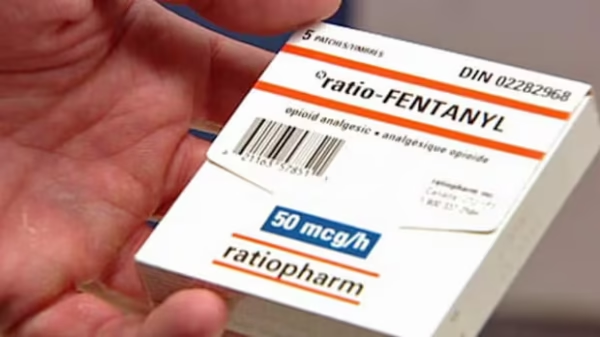
Fentanyl is a synthetic opioid that is 50–100 times stronger than morphine. In Australia, pharmaceutical fentanyl is legally prescribed in controlled medical settings for:
-
severe chronic pain
-
post-surgery pain
-
cancer-related pain
-
palliative care
Clinically approved fentanyl comes in forms such as:
-
patches
-
injections
-
lozenges
-
nasal sprays
However, illicit fentanyl, often produced in unregulated labs, has become a global public health danger. It is sometimes found mixed with other substances without the user’s knowledge, sharply increasing overdose risks.
Fentanyl in Australia: Current Situation
Compared to the US and Canada, Australia has a lower prevalence of fentanyl-related overdoses, thanks to stricter prescription controls and strong monitoring systems. However:
-
Illicit fentanyl has been detected in some Australian drug markets.
-
Law enforcement has reported sporadic seizures of fentanyl powder and counterfeit pills.
-
Health authorities warn that unintentional exposure through contaminated substances is a growing concern.
Australia’s harm-reduction and drug-testing organizations stress the importance of awareness, as even tiny doses can be fatal.
Is Fentanyl Legal in Australia?
Yes—but only in medical settings.
Fentanyl is classified as a Schedule 8 (Controlled Drug) under the Poisons Standard in Australia. This means:
-
It can only be prescribed by authorized healthcare professionals.
-
Its manufacture, distribution, and dispensing are strictly regulated.
-
Non-prescribed possession, importation, or distribution is illegal and carries severe penalties.
Any non-medical acquisition of fentanyl is unsafe, illegal, and extremely dangerous due to contamination risks and unpredictable potency.
Risks and Dangers of Fentanyl
Fentanyl’s potency makes it extremely risky, especially when obtained outside medical supervision. Key dangers include:
1. High Overdose Risk
Because fentanyl is so strong, even 2 mg can be lethal. Illicit fentanyl is often mixed with:
-
heroin
-
counterfeit oxycodone pills
-
cocaine
-
MDMA
-
methamphetamine
Users often do not know fentanyl is present.
2. Respiratory Depression
Overdose causes breathing to slow or stop, leading to:
-
unconsciousness
-
brain damage
-
death
This can happen within minutes.
3. Dependence and Addiction
Like other opioids, fentanyl can cause physical dependence and withdrawal symptoms.
Signs of Fentanyl Overdose
Recognizing the symptoms quickly can save lives:
-
slow or stopped breathing
-
tiny “pinpoint” pupils
-
blue or grey lips/fingertips
-
unresponsiveness
-
choking or gurgling sounds
-
slowed heart rate
If you suspect an overdose, call Triple Zero (000) immediately.
Overdose Prevention and Harm Reduction
Australia has strong harm-reduction systems. Here are key safety guidelines:
1. Avoid Unknown Substances
Illicit fentanyl contamination often occurs in powders and counterfeit pills.
2. Use Drug-Checking Services (Where Available)
While Australia’s national policies vary by state, some regions allow pill-testing or drug-checking at:
-
supervised consumption sites
-
specific festivals
-
authorized centers
3. Access Naloxone (Overdose Reversal Medication)
Naloxone temporarily reverses opioid overdose. In Australia, under the Take Home Naloxone Program, it is:
-
free
-
available without a prescription
-
offered at pharmacies and some health services
Forms include nasal sprays and injections.
4. Never Use Alone
Someone should be present to respond in case of emergency.
5. Know the Strength of Prescription Medications
If prescribed fentanyl patches or other forms, always follow medical guidance carefully.
Support for Opioid Dependence in Australia
If someone is struggling with fentanyl or opioid dependence, multiple support systems exist:
1. Alcohol and Drug Information Service (ADIS)
Available in every state and territory, offering:
-
phone support
-
referral to local services
-
crisis help
2. Opioid Treatment Programs
These include:
-
methadone maintenance
-
buprenorphine (Suboxone) programs
-
supervised medical treatment
3. Counselling and Mental Health Support
Free or low-cost counselling is available through:
-
Headspace
-
Lifeline (13 11 14)
-
Beyond Blue
4. Hospital and Emergency Services
For acute cases, hospitals provide detoxification and medical monitoring.
How Australia Regulates Fentanyl
Australia’s regulatory approach aims to protect public safety and limit misuse:
-
Electronic prescription monitoring helps track opioid prescriptions.
-
Healthcare provider training ensures safe dosing.
-
Strict importation controls prevent illegal supply.
-
Penalties apply for trafficking, possessing, or purchasing fentanyl without medical authorization.
These safeguards are crucial to preventing an opioid crisis similar to those seen elsewhere.
Fentanyl vs. Other Opioids in Australia
| Feature | Fentanyl | Oxycodone | Morphine |
|---|---|---|---|
| Potency | Extremely high | High | Moderate |
| Medical Use | Severe pain, surgery, cancer | Moderate–severe pain | Severe pain |
| Overdose Risk | Very high | High | Moderate |
| Non-medical Availability | Rare | More common | Moderate |
| Addiction Risk | High | High | High |
-
fentanyl Australia
-
fentanyl awareness
-
dangers of fentanyl
-
what is fentanyl
Secondary Keywords
-
fentanyl overdose prevention
-
fentanyl effects
-
opioid crisis Australia
-
naloxone Australia
-
fentanyl risks
Long-Tail Keywords
-
how to identify fentanyl overdose in Australia
-
legal status of fentanyl in Australia
-
fentanyl harm reduction guide
-
fentanyl support services in Australia
These help target Google snippets and boost visibility without promoting illegal activity.
Frequently Asked Questions
1. Is fentanyl legal in Australia?
Yes. Fentanyl is legal only with a prescription and is regulated as a Schedule 8 controlled substance. Non-medical possession or distribution is illegal.
2. What makes fentanyl dangerous?
Its extreme potency—50–100 times stronger than morphine—means that even tiny doses can cause fatal overdose, especially when mixed with other drugs.
3. How can someone get help for fentanyl or opioid dependence?
In Australia, people can access ADIS hotlines, opioid treatment programs (methadone or buprenorphine), and free mental health services like Lifeline and Beyond Blue.
4. How can fentanyl overdose be reversed?
Naloxone can temporarily reverse opioid overdose. The medication is available for free without prescription under Australia’s Take Home Naloxone Program.
5. Is illicit fentanyl a problem in Australia?
While less widespread than in North America, cases of illicit fentanyl contamination do occur. Authorities warn that awareness and prevention are essential.
Conclusion
Fentanyl awareness is a growing public-health priority in Australia. Understanding its risks, legal status, and overdose-prevention strategies can help save lives. Through strong regulation, harm-reduction services, and accessible support programs, Australia continues to take proactive steps to prevent an opioid crisis.
| Quantity | 12 µg/h – 10 boxes,,,, 25 µg/h – 10 boxes,,, , 50 µg/h – 10 boxes,,, , 75 µg/h – 10 boxes,,,, 100 µg/h – 10 boxes |
|---|
Reviews
There are no reviews yet.
Related products
pain relief
pain relief
pain relief
pain relief
pain relief
pain relief
pain relief
pain relief
Be the first to review “Fentanyl (transdermal system patch)”